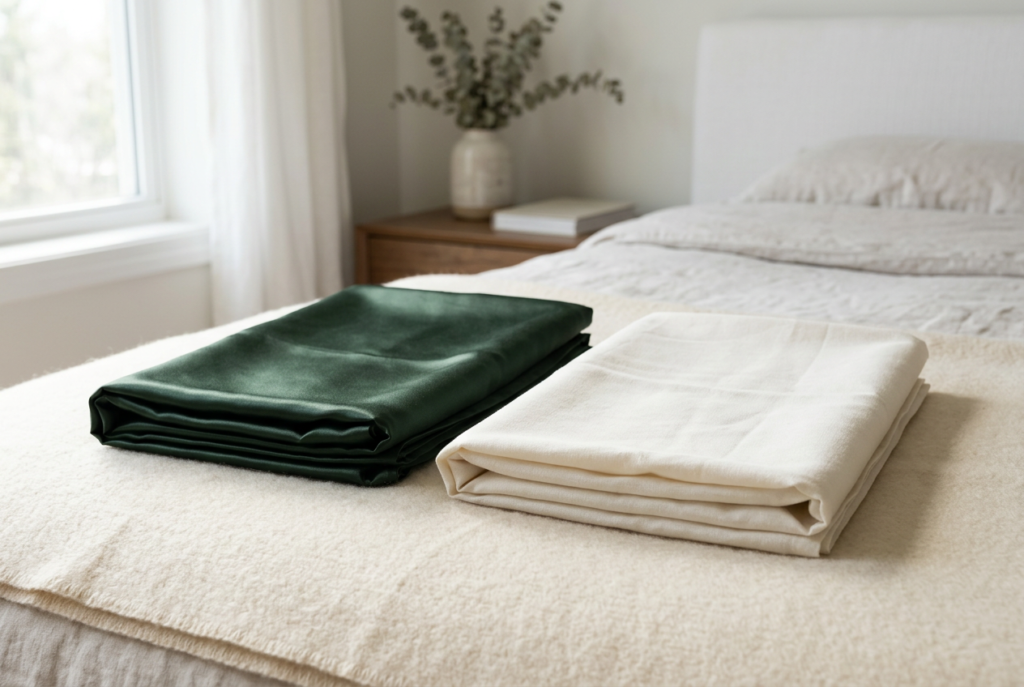
AI-generated illustration; not a product photograph.Choosing bedding often starts with how you want your bed to feel: smooth and sleek, crisp and fresh, or soft and relaxed. When comparing satin vs cotton bedding, however, there is an important detail to understand first.
Satin is a weave, while cotton is a fibre. They are not direct opposites. Understanding both the fabric composition and the weave helps you make a more informed choice than relying on a product name or photograph alone.
Satin vs Cotton Bedding: What Is the Difference?
Cotton is a natural fibre used to make many types of bedding. The weave affects the finished fabric’s texture and appearance. Cotton percale, for example, typically has a matte appearance and a crisp feel, while cotton sateen tends to have a smoother surface and a subtle sheen.
Satin describes a weave that creates a smooth face with a noticeable sheen. Satin bedding can be made from polyester, silk, or other fibres. A product described as “satin” is therefore not necessarily silk.
Cotton sateen also has a smooth finish, but it should not be confused with every product sold as satin. Always read the material label to understand what you are buying.
Start With the Fibre Composition
Before comparing colours or prices, find the product’s material information.
A label that states “100% polyester satin” tells you both the fibre and the weave. A description that only says “luxury satin” does not provide the same information.
Likewise, check whether cotton bedding is made from 100% cotton or a blend. Blended fabrics can feel and behave differently depending on their composition and construction.
If the listing does not clearly identify the material, ask the seller before ordering. Words such as “silky,” “premium,” or “hotel quality” are not substitutes for a fabric specification.
Compare the Texture You Prefer
Satin’s smooth face may appeal to you if you enjoy a sleek surface and a glossy bedroom look. Depending on the fabric, it can also feel slippery, which may affect how pillows or covers stay in place.
Cotton bedding offers a range of textures. Percale is often chosen for its crisper feel, while sateen offers a smoother finish. Other cotton constructions can feel softer or more textured.
Rather than asking which option is universally better, consider what you already enjoy sleeping on. Do you prefer a matte finish with some texture, or a smoother surface with sheen?
What Should Warm Sleepers Look For?
Neither “satin” nor “cotton” alone tells you exactly how warm a bedding set will feel.
Fibre composition, weave density, fabric weight, finishing, and the layers on your bed all influence comfort. Your mattress protector, duvet filling, room temperature, and sleepwear also matter.
If you tend to sleep warm, look for clear information about the fabric’s construction and weight. Avoid assuming that a shiny fabric will stay cool all night simply because it feels cool when first touched.
When comparing products, prioritise detailed material information over broad “cooling” claims.
Check Washing and Care Requirements
The best bedding for your routine is also bedding you can comfortably maintain.
Read the care instructions before buying. Check the recommended washing temperature, whether tumble drying is allowed, and whether special handling is required.
Polyester satin, silk satin, and cotton bedding can have different care requirements. Instructions for one should not automatically be applied to another.
A smooth satin surface may also catch on rough objects, so follow the product’s handling guidance. For cotton bedding, check the care label for advice on drying and shrinkage rather than assuming every cotton set behaves the same way.
Confirm Sizes and Set Contents
Fabric choice matters, but the bedding still needs to fit.
Measure your mattress’s width, length, and depth before ordering fitted sheets. For duvet covers, compare the cover dimensions with your duvet insert. Check pillowcase measurements separately.
Do not rely only on names such as “Queen” or “King,” because dimensions can vary between brands and countries.
Also read the list of included pieces. A three-piece duvet cover set may contain a duvet cover and two pillowcases, not a duvet insert or fitted sheet.
For more sizing and buying advice, read our guide to choosing bedding for everyday comfort.
Which Bedding Should You Choose?
If you prefer a glossy appearance and a sleek surface, satin may suit your preferences. Check the fibre composition so you understand which type of satin you are considering.
If you prefer cotton, choose the weave as carefully as the fibre. Cotton percale and cotton sateen offer different finishes, even though both can be made from the same fibre.
For either option, base your decision on the material, texture, care requirements, measurements, and your own sleep preferences. There is no single fabric that is best for everyone.
Explore the TextilesFlow bedding collection, and check each product’s fabric composition, measurements, and care instructions before choosing.